Best Time to Visit United States in February
Weather, crowds, costs, and events for visiting United States in February

Best Time to Visit United States in February
The best times to visit United States are April to October for peak tourist season, and January to November for the cheapest flights and hotels of the year. Both combine favourable conditions with better value than peak alone, and United States at its most rewarding.
AT A GLANCE
June to July
Warm: Peak tourist season. Crowds run High — book 3–4 months ahead.
April to October
Peak tourist season. Crowd level is High; peak pricing.
January to November
Cheapest flights and hotels of the year. Crowd level is Low; book 2–4 weeks ahead.
Which season is best for United States?
February falls in winter — here's what to expect.
Spring
Spring — Garden Walks

March · April · May
Spring season
Spring is when travellers book United States for garden walks. Garden Walks timing runs New York City (early April); Los Angeles (mid April); Miami (late April). Expect 7–17°C averages with 8–10 rain days/month and high crowds — but hotel rates hit $130–$180/night and high crowds fill the main sights Mid-season sits near 12°C with 9 rain days in April.
Early Blooms [Mar], Spring window [Apr], Clear Trails [May]
Mar 7°C, Apr 12°C, May 17°C — mixed skies (8–10 rain days)
First-timers, photographers, couples, soft hikers
April pushes rates to $130–$180/night with high crowds at headline sights. May brings 10 rain days — outdoor days get cut short without a flexible plan.
Travelling to United States in Spring?
Book United States's garden walks for April at least 2–3 months out, then spend 2 nights in New York City in March where mid rates and medium crowds trade a short hop for calmer spring days.
Summer
Summer — Warm Evenings

June · July · August
Warm season
Summer is when travellers book United States for warm evenings. Warm Evenings timing runs New York City (early June); Los Angeles (mid June); Miami (late June). Expect 22–26°C averages with 9–11 rain days/month and high crowds — but hotel rates hit $180–$250/night and high crowds fill the main sights Mid-season sits near 22°C with 11 rain days in June.
Warm Evenings [Jun], Warm Evenings [Jul], Long Evenings [Aug]
Jun 22°C, Jul 26°C, Aug 25°C — mixed skies (9–11 rain days)
Festival-goers, families, beach seekers, nightlife fans
June pushes rates to $180–$250/night with high crowds at headline sights. June brings 11 rain days — outdoor days get cut short without a flexible plan.
Travelling to United States in Summer?
Book United States's warm evenings for June at least 3–4 months out, then spend 2 nights in New York City in June where peak rates and high crowds trade a short hop for calmer summer days.
Autumn
Autumn — Crisp Hiking

September · October · November
Mild season
Autumn is when travellers book United States for crisp hiking. Crisp Hiking timing runs New York City (early September); Los Angeles (mid September); Miami (late September). Expect 8–20°C averages with 7–8 rain days/month and medium crowds — and yet shoulder gaps still leave medium footfall on peak weekends Mid-season sits near 20°C with 8 rain days in September.
Mild Walks [Sep], Crisp window [Oct], Cool Wandering [Nov]
Sep 20°C, Oct 14°C, Nov 8°C — mostly clearer skies (7–8 rain days)
Photographers, hikers, food travellers, couples
September pushes rates to $90–$130/night with medium crowds at headline sights. September brings 8 rain days — outdoor days get cut short without a flexible plan.
Travelling to United States in Autumn?
Book United States's crisp hiking for September at least 4–6 weeks out, then spend 2 nights in New York City in September where mid rates and medium crowds trade a short hop for calmer autumn days.
Winter
Winter — Holiday Lights

December · January · February
Festive season
Winter is when travellers book United States for holiday lights. Holiday Lights timing runs New York City (early December); Los Angeles (mid December); Miami (late December). Expect 2–3°C averages with 7–8 rain days/month and medium crowds — and yet shoulder gaps still leave medium footfall on peak weekends Mid-season sits near 3°C with 8 rain days in December.
Festive window [Dec], Quiet Streets [Jan], Quiet Streets [Feb]
Dec 3°C, Jan 2°C, Feb 3°C — mixed skies (7–8 rain days)
Skiers, budget travellers, museum lovers, festive shoppers
December pushes rates to $90–$130/night with medium crowds at headline sights. December brings 8 rain days — outdoor days get cut short without a flexible plan.
Travelling to United States in Winter?
Book United States's holiday lights for December at least 4–6 weeks out, then spend 2 nights in New York City in December where mid rates and medium crowds trade a short hop for calmer winter days.
.png)
Build a personalised itinerary, your way
Drag and drop destinations, activities, and stays into your perfect day-by-day plan. Reorder stops, adjust timing, and share your itinerary with travel companions in one place.
Which month is best for United States?
| Month | Avg Temp | Rain Days | Crowds | Cost | Overall | Best For |
|---|---|---|---|---|---|---|
| January | 2°C | 8 | Low | $ Budget | ★ Avoid | Quiet winter days |
| February | 3°C | 7 | Low | $ Budget | ★★ Okay | Quiet budget travel |
| March | 7°C | 8 | Medium | $$ Mid | ★★ Okay | Early spring walks |
| April | 12°C | 9 | High | $$$ High | ★★★ Great | Spring city walking |
| May | 17°C | 10 | High | $$$ High | ★★★ Great | Comfortable sightseeing |
| June | 22°C | 11 | High | $$$$ Peak | ★★★ Great | Warm outdoor days |
| July | 26°C | 10 | Very High | $$$$ Peak | ★★ Okay | Warm outdoor days |
| August | 25°C | 9 | High | $$$ High | ★★ Okay | Warm evening outings |
| September | 20°C | 8 | Medium | $$ Mid | ★★★ Great | Mild city walking |
| October | 14°C | 7 | Medium | $$ Mid | ★★★ Great | Crisp outdoor walking |
| November | 8°C | 7 | Low | $ Budget | ★★ Okay | Cool quiet wandering |
| December | 3°C | 8 | Medium | $$ Mid | ★★ Okay | Festive city lights |
Temperatures shown as United States monthly averages.
United States Events and Festivals by Month
Events worth timing your trip around — and how they affect crowds and prices.
Low-season rates in United States
Low-season rates in United States is one of the few United States windows that reshapes visitor costs and daily rhythm in United States. It matters because hotels, trains and attraction hours move with the crowd, not with sightseeing wishlists. Timing rolls geographically — United States January. The practical window lasts about 20 days, while local conditions sit near 2°C with 8 rain days and low crowds.
What to expect
- Expect low footfall around United States during January, with lines forming earlier than published opening times.
- Temperatures near 2°C and 8 rain days shape outdoor plans in United States across January.
- Skipping the first weekend of January in United States often cuts queues without changing the season’s core weather.
- Transport seats and hotels for United States (January) sell out 4–6 weeks ahead — leftover inventory skews to less convenient areas.
Planning tips
- Book stays and reserved transport at least 4–6 weeks before JAN dates; peak low demand removes flexible inventory first.
- Check United States national tourism board seasonal pages before you lock flights or hotels — Verify current-year advisories before booking. Drop any date that the source has not confirmed for 2026.
- Keep long-haul moves outside the busiest January weekends; day-trip from a quieter base instead.
Cold but fewer crowds in United States
Cold but fewer crowds in United States is one of the few United States windows that reshapes visitor costs and daily rhythm in United States. It matters because hotels, trains and attraction hours move with the crowd, not with sightseeing wishlists. Timing rolls geographically — United States February. The practical window lasts about 20 days, while local conditions sit near 3°C with 7 rain days and low crowds.
What to expect
- Expect low footfall around United States during February, with lines forming earlier than published opening times.
- Temperatures near 3°C and 7 rain days shape outdoor plans in United States across February.
- Skipping the first weekend of February in United States often cuts queues without changing the season’s core weather.
- Transport seats and hotels for United States (February) sell out 4–6 weeks ahead — leftover inventory skews to less convenient areas.
Planning tips
- Book stays and reserved transport at least 4–6 weeks before FEB dates; peak low demand removes flexible inventory first.
- Check United States national tourism board seasonal pages before you lock flights or hotels — Verify current-year advisories before booking. Drop any date that the source has not confirmed for 2026.
- Keep long-haul moves outside the busiest February weekends; day-trip from a quieter base instead.
Spring highlight in United States
Spring highlight in United States is one of the few United States windows that reshapes visitor costs and daily rhythm in United States. It matters because hotels, trains and attraction hours move with the crowd, not with sightseeing wishlists. Timing rolls geographically — United States April. The practical window lasts about 20 days, while local conditions sit near 12°C with 9 rain days and high crowds.
What to expect
- Expect high footfall around United States during April, with lines forming earlier than published opening times.
- Temperatures near 12°C and 9 rain days shape outdoor plans in United States across April.
- Skipping the first weekend of April in United States often cuts queues without changing the season’s core weather.
- Transport seats and hotels for United States (April) sell out 3–4 months ahead — leftover inventory skews to less convenient areas.
Planning tips
- Book stays and reserved transport at least 3–4 months before APR dates; peak high demand removes flexible inventory first.
- Check United States national tourism board seasonal pages before you lock flights or hotels — Verify current-year advisories before booking. Drop any date that the source has not confirmed for 2026.
- Keep long-haul moves outside the busiest April weekends; day-trip from a quieter base instead.
Peak demand in United States
Peak demand in United States is one of the few United States windows that reshapes visitor costs and daily rhythm in United States. It matters because hotels, trains and attraction hours move with the crowd, not with sightseeing wishlists. Timing rolls geographically — United States June. The practical window lasts about 20 days, while local conditions sit near 22°C with 11 rain days and high crowds.
What to expect
- Expect high footfall around United States during June, with lines forming earlier than published opening times.
- Temperatures near 22°C and 11 rain days shape outdoor plans in United States across June.
- Skipping the first weekend of June in United States often cuts queues without changing the season’s core weather.
- Transport seats and hotels for United States (June) sell out 3–4 months ahead — leftover inventory skews to less convenient areas.
Planning tips
- Book stays and reserved transport at least 3–4 months before JUN dates; peak high demand removes flexible inventory first.
- Check United States national tourism board seasonal pages before you lock flights or hotels — Verify current-year advisories before booking. Drop any date that the source has not confirmed for 2026.
- Keep long-haul moves outside the busiest June weekends; day-trip from a quieter base instead.
Heat and humidity in United States
Heat and humidity in United States is one of the few United States windows that reshapes visitor costs and daily rhythm in United States. It matters because hotels, trains and attraction hours move with the crowd, not with sightseeing wishlists. Timing rolls geographically — United States July. The practical window lasts about 20 days, while local conditions sit near 26°C with 10 rain days and very high crowds.
What to expect
- Expect very high footfall around United States during July, with lines forming earlier than published opening times.
- Temperatures near 26°C and 10 rain days shape outdoor plans in United States across July.
- Skipping the first weekend of July in United States often cuts queues without changing the season’s core weather.
- Transport seats and hotels for United States (July) sell out 3–4 months ahead — leftover inventory skews to less convenient areas.
Planning tips
- Book stays and reserved transport at least 3–4 months before JUL dates; peak very high demand removes flexible inventory first.
- Check United States national tourism board seasonal pages before you lock flights or hotels — Verify current-year advisories before booking. Drop any date that the source has not confirmed for 2026.
- Keep long-haul moves outside the busiest July weekends; day-trip from a quieter base instead.
Festive / winter peak in United States
Festive / winter peak in United States is one of the few United States windows that reshapes visitor costs and daily rhythm in United States. It matters because hotels, trains and attraction hours move with the crowd, not with sightseeing wishlists. Timing rolls geographically — United States December. The practical window lasts about 20 days, while local conditions sit near 3°C with 8 rain days and medium crowds.
What to expect
- Expect medium footfall around United States during December, with lines forming earlier than published opening times.
- Temperatures near 3°C and 8 rain days shape outdoor plans in United States across December.
- Skipping the first weekend of December in United States often cuts queues without changing the season’s core weather.
- Transport seats and hotels for United States (December) sell out 4–6 weeks ahead — leftover inventory skews to less convenient areas.
Planning tips
- Book stays and reserved transport at least 4–6 weeks before DEC dates; peak medium demand removes flexible inventory first.
- Check United States national tourism board seasonal pages before you lock flights or hotels — Verify current-year advisories before booking. Drop any date that the source has not confirmed for 2026.
- Keep long-haul moves outside the busiest December weekends; day-trip from a quieter base instead.
When is United States Cheapest to Visit?
Timing your trip right can save 25 to 40 percent on flights and hotels. Green months are cheapest, red months are most expensive.
Cheapest window
January–November. Save about 25–40% versus $$$$ Peak June; hotels track the same flight discounts in this $ Budget window, so flight and stay costs move together.
Book early regardless
June and July sell out entirely when crowds hit High and pricing hits $$$$ Peak — book accommodation 3–4 months ahead regardless of budget, not only flights.
Best value sweet spot
September and October: great weather on this page (~20°C, 8 rain days) at $$ Mid pricing; Medium crowds still keep it from matching June’s sell-out rush.
Cheapest months to visit United States
January–November is the cheapest stretch to visit United States. $ Budget months on this page typically cut flights about 25–35% versus $$$$ Peak, with hotel rates moving in step rather than lagging. Averages sit near 2°C with roughly 8 rain days, so packing stays simple if you accept cooler or wetter days. The exception: festival or holiday spikes inside an otherwise cheap month can briefly push stays toward $$ Mid even when the band still reads $ Budget.
Most expensive months to visit United States
June and July are the most expensive months to visit United States. $$$$ Peak and $$$ High rows align with High or Very High crowds and the 3–4 months booking lead already shown for sell-outs. Expect the 25–40% saving story to reverse here — you pay the premium the chart paints in red. Weather can still look strong (22°C, 11 rain days in June), which is why demand sticks. The exception: a shoulder week just outside the core peak label sometimes dips to $$$ High instead of full $$$$ Peak.
Best value months to visit United States
September and October offer the best value months to visit United States. Great-rated weather pairs with $$ Mid instead of $$$$ Peak, so you keep comfort without the full 25–40% penalty of peak pricing. September averages about 20°C with 8 rain days and Medium crowds — busy enough for open attractions, not yet June-style sell-outs. The exception: once a “value” month overlaps a major holiday cluster, lead times jump back toward 3–4 months even if the cost word has not flipped to $$$$ Peak.
Best Time to Visit United States For…
January–November. Flights are typically 25–35% cheaper than peak season — base in United States and keep trips flexible inside that budget window.
January–November. Crowd level stays Low with about 2°C averages — base in United States for quieter streets and easier bookings.
April and May and October. Expect around 12°C with a great rating — base in United States for the most comfortable sightseeing days.
April and May or October. April and May maximises iconic weather in United States but draws higher crowds and peak pricing; October trades that rush for calmer streets and still-strong ratings.
October. Base in New York City for crisp foliage day trips upstate and in the Hudson Valley.
March and April. Base in Las Vegas for mild pool weather and nearby canyon day trips before summer heat.
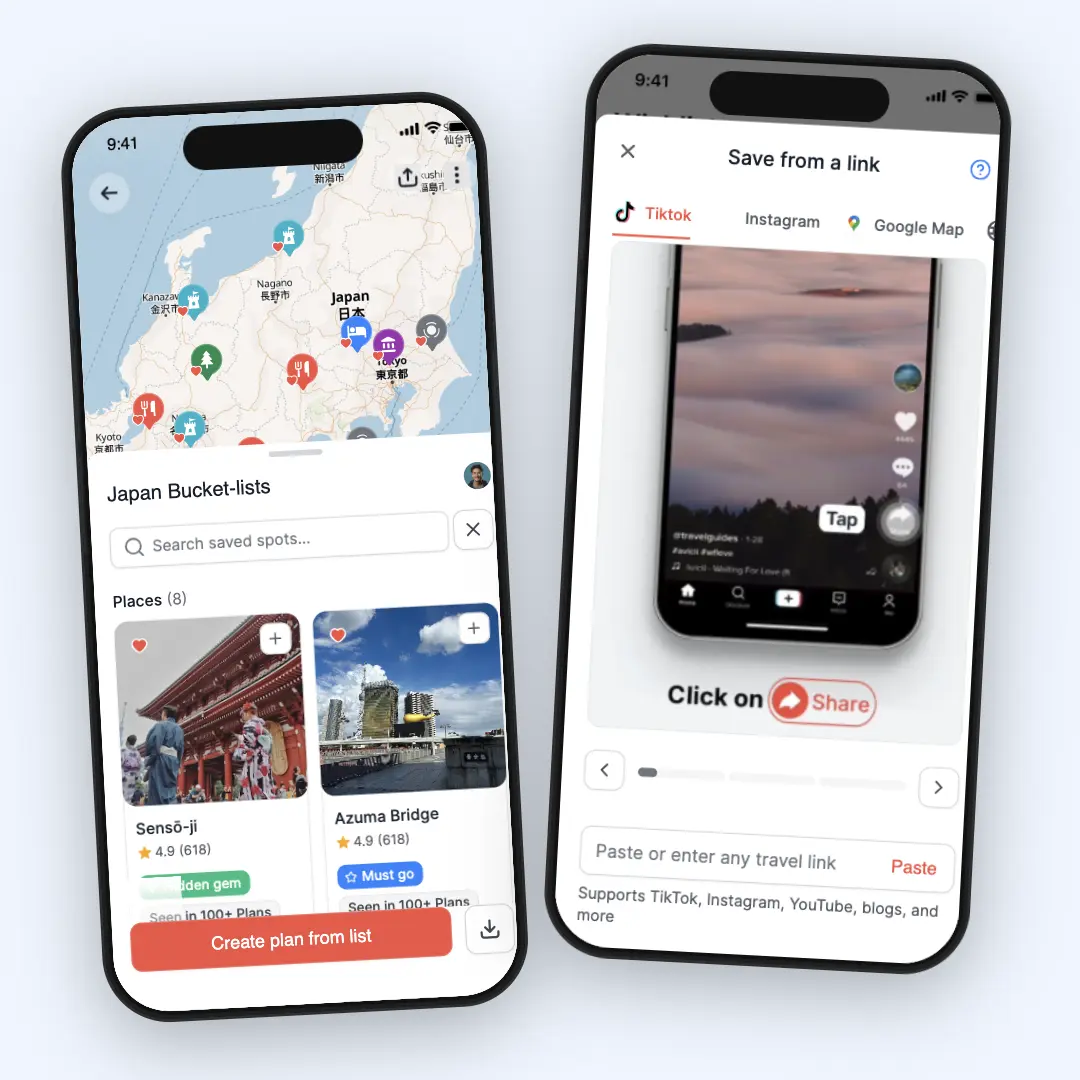
Import from anywhere.
Plan in seconds.
Spotted something on TikTok? Saved a reel? Have a note full of ideas? Import directly from social media, Google Maps, or your notes — and turn it into a full itinerary immediately.
Best Time to Visit Each City in United States
Timing varies across United States's main cities. Here is when each is at its best.

United States
Las Vegas
Mild desert pool weather in March
Best time to visit
United States
Miami
Mild dry winter comfort in January
Best time to visit
United States
New York City
Crisp autumn city days in October
Best time to visit
United States
Los Angeles
Warm sunny sightseeing in May
Best time to visit
United States
Orlando
Pleasant spring park weather in April
Best time to visitUnited States Travel Essentials
- Currency & cards
- US dollar (USD). Cards are standard almost everywhere; cash is useful for tips, small vendors, and some transit.
- Connectivity
- eSIM or major-carrier prepaid plans cover cities well. Free Wi‑Fi is common in hotels, cafés, and airports.
- Domestic transport
- Cities vary: subway, bus, or ride-hailing locally; domestic flights or intercity trains and coaches for longer hops.
- Etiquette & logistics
- Tip for sit-down meals and rides where customary. Keep ID handy for domestic flights and some attractions.
- Visa / entry
- Confirm entry rules on the official U.S. Department of State visa pages before you travel. Official source
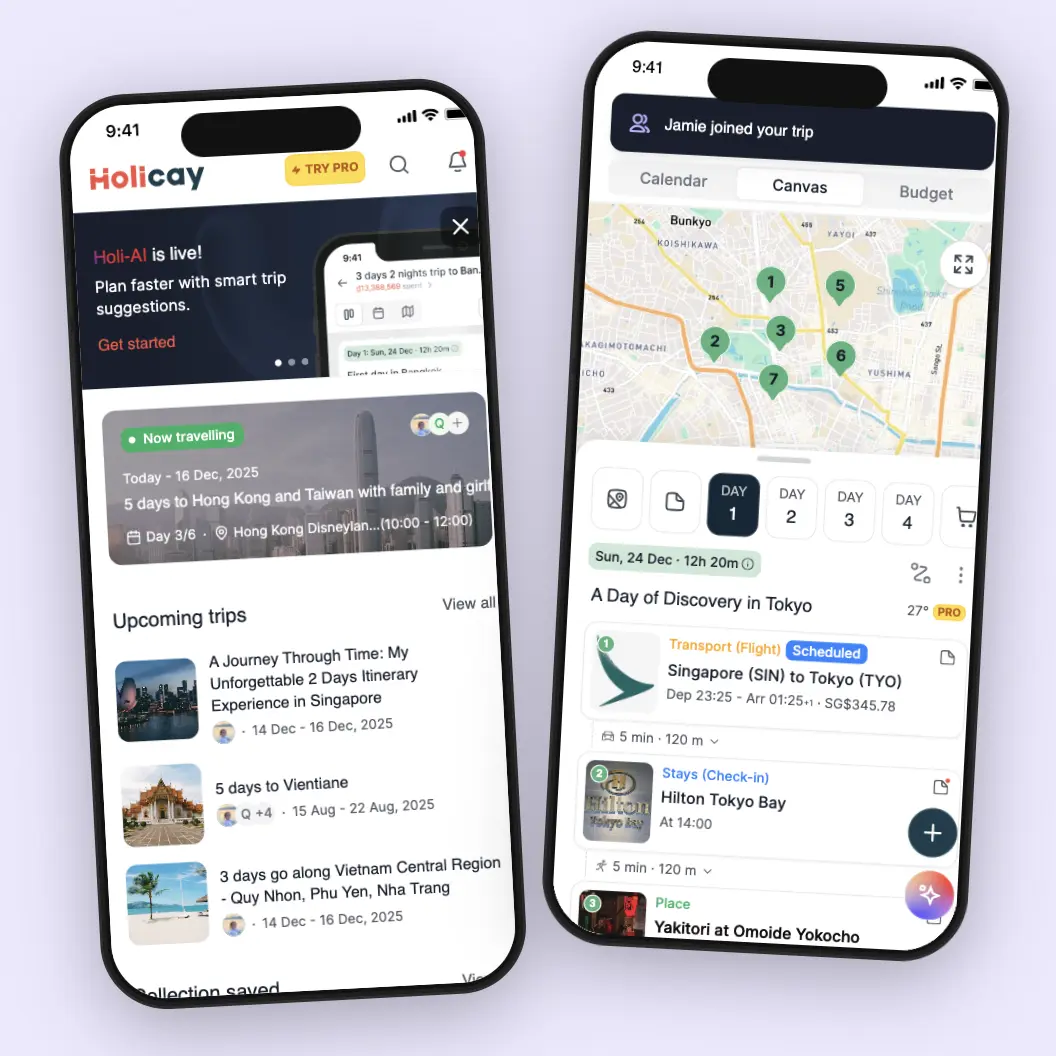
Your whole trip,
in your pocket.
Every day, every stay, every transfer lives in the app. Pull up your canvas on the go, track where you are day by day, and never lose the thread of your trip.
United States Travel Timing — FAQ
Everything you need to know about timing your United States trip
Plan United States as a multi-city trip rather than a single stop: base yourself in one hub first, then add a second region once the main sights feel covered. Match nights to the April–October weather window on this page so you are not rushing between trains.
Everything You Need to Plan Your United States Trip
Jump to any guide, itinerary, or planning resource for United States.
How we work this out
Temperature and rainfall figures are 30-year meteorological averages. Crowd levels come from national tourism arrival data. Price bands reflect mid-range accommodation and economy flights from major long-haul cities, sampled quarterly.
Last updated 18 July 2026 · Written by the Holicay travel team